

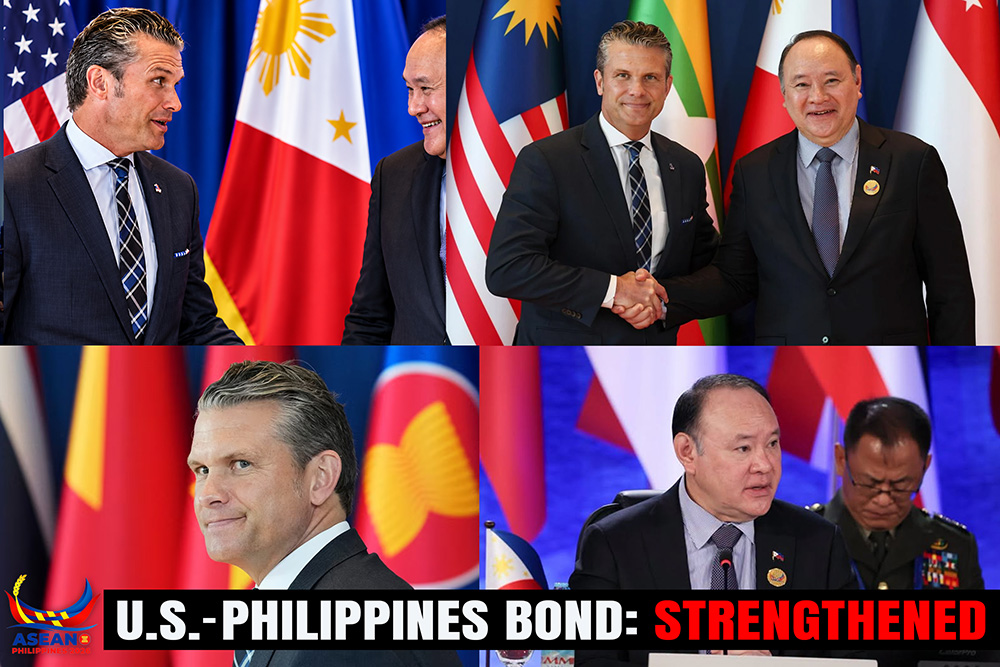
CEBU, PHILIPPINES — Philippine Secretary of National Defense Gilberto C. Teodoro Jr. took center stage in a major regional defense gathering on October 28–29, 2026, as the Philippines hosted Southeast Asia’s senior defense officials and their international counterparts in Lapu-Lapu City, Cebu. The meetings brought together competing strategic interests, growing concerns over maritime security, and a new American proposal for long-term defense cooperation with the Association of Southeast Asian Nations (ASEAN).
United States Secretary of War Pete Hegseth used the occasion to propose a new U.S.–ASEAN Framework for Defence Cooperation, emphasizing military readiness, maritime surveillance, interoperability, and national sovereignty. However, the gathering was more than an American diplomatic initiative. Under Teodoro’s leadership, the Philippines chaired the 20th ASEAN Defence Ministers’ Meeting (ADMM) and the 13th ASEAN Defence Ministers’ Meeting-Plus (ADMM-Plus), placing Manila in a central position in discussions concerning the region’s security future.
The meetings occurred against the backdrop of continuing confrontations in the West Philippine Sea, growing military competition between Washington and Beijing, and increasing pressure on Southeast Asian governments to preserve their strategic independence while strengthening their defense capabilities.
Gilberto Teodoro Leads Philippine Defense Diplomacy
As chairman of the 2026 ASEAN defense meetings, Secretary Gilberto Teodoro Jr. was responsible for guiding discussions among participating defense establishments and advancing the Philippines’ priorities for regional security cooperation. The meetings were conducted under the Philippines’ ASEAN chairship theme, “Navigating Our Future, Together.”
In his opening remarks on October 28, Teodoro identified three priorities for regional defense cooperation: strengthening ASEAN unity, expanding practical cooperation among defense establishments, and encouraging candid discussions about security threats affecting member states.
Teodoro emphasized that ASEAN’s internal stability and cohesion are essential in an increasingly fragmented international environment. He called for continued respect for national sovereignty, territorial integrity, peaceful dispute resolution, and the rejection of threats or the use of force.
Addressing disagreements among member states, including disputes in the South China Sea, Teodoro declared: “And where such differences exist, including in the South China Sea, we shall settle them through peaceful and legal means.”
The statement carried particular significance for the Philippines, whose maritime forces have repeatedly encountered Chinese coast guard and other government vessels in disputed areas of the West Philippine Sea. Teodoro’s emphasis on international law and peaceful settlement reflected Manila’s longstanding position that maritime disputes should be addressed through lawful mechanisms rather than coercion.
Beyond territorial disputes, Teodoro identified maritime security, the protection of critical underwater infrastructure, and cooperation among regional defense establishments as important achievements and continuing priorities of ASEAN defense cooperation.
He also called attention to threats extending beyond traditional military confrontation, including disruptions to food and energy supplies, climate-related emergencies, and the potential consequences of a developing super El Niño event for Southeast Asian countries.
Philippines and United States Reaffirm Defense Partnership
On October 28, Teodoro and Hegseth participated in the ASEAN–United States Defence Ministers’ Informal Meeting, held alongside the broader ASEAN gathering. The meeting coincided with the 80th anniversary of diplomatic relations between the Philippines and the United States, adding historical significance to discussions about the future of their security partnership.
Teodoro welcomed the American delegation and expressed appreciation for Washington’s continuing engagement with ASEAN defense institutions. He emphasized the importance of a sustained American presence in supporting peace and stability across Southeast Asia and the wider Indo-Pacific.
“We value the United States’ sustained engagement with the defense establishments of ASEAN as a robust US presence is necessary for peace and stability in Southeast Asia and in the broader Indo-Pacific Region,” Teodoro stated.
The Philippine defense secretary also acknowledged American support for ASEAN centrality and participation in ASEAN-led defense mechanisms. These include ADMM-Plus and regional military exercises intended to improve operational coordination among participating countries.
Teodoro specifically recognized the second ASEAN–United States Maritime Exercise, conducted in Indonesia in December 2025, as well as American support for the Philippines and Japan as co-chairs of the current ADMM-Plus Experts’ Working Group on Maritime Security.
The bilateral relationship remains particularly important to Philippine defense planning because the United States is a treaty ally of the Philippines. Cooperation encompasses military training, defense modernization, information sharing, and activities intended to strengthen the Armed Forces of the Philippines’ ability to protect national territory and maritime interests.
Hegseth Proposes New U.S.–ASEAN Defense Framework
During the October 28 gathering, Hegseth proposed the development of a U.S.–ASEAN Framework for Defence Cooperation intended to guide military collaboration over the coming years.
Describing the need for a more ambitious regional partnership, Hegseth emphasized that Washington was interested in practical cooperation rather than requiring participating countries to adopt identical positions on every international issue.
“We’re not going to agree on everything, nor do we need to,” Hegseth told regional defense leaders, emphasizing cooperation where national interests overlap.
The proposed framework would seek to provide longer-term direction for defense engagement between the United States and ASEAN, potentially including maritime security, military training, information sharing, and improvements in operational interoperability.
Hegseth indicated that the United States was prepared to begin developing the initiative with Singapore as that country assumes leadership of the ASEAN defense mechanisms in the coming year.
The proposal was presented in anticipation of the approaching 50th anniversary of U.S.–ASEAN relations, offering a diplomatic opportunity to establish a more structured approach to regional defense cooperation.
Importantly, the proposal was not a finalized agreement. The publicly reported remarks did not establish binding military commitments, specific funding allocations, new American bases, or a detailed implementation schedule. Any eventual framework would require further discussions among the participating governments.
Peace Through Strength and Regional Sovereignty
Hegseth characterized the American defense approach as “strong, quiet, and clear,” presenting military preparedness and credible deterrence as essential components of regional stability.
The formulation reflects the Trump administration’s stated preference for maintaining peace through military strength while avoiding unnecessary confrontation. Washington has repeatedly emphasized the importance of capable regional partners that can contribute to their own defense rather than relying exclusively on American military protection.
For the Philippines, the emphasis on sovereignty and resistance to coercion is particularly relevant. Manila faces the continuing challenge of protecting its maritime rights while managing a complex economic and diplomatic relationship with China.
The American proposal also raises questions about how Southeast Asian governments will balance increased defense cooperation with their longstanding preference for strategic autonomy. ASEAN member states maintain different relationships with Washington and Beijing, and their perceptions of regional security threats are not identical.
Hegseth did not explicitly identify China as the principal adversary in the reported address. Nevertheless, his emphasis on maritime security, deterrence, and resistance to coercion was delivered in a region where Chinese military modernization and maritime activity remain central strategic concerns.
China Challenges Philippine Leadership of Defense Meeting
The Cebu meetings were accompanied by a diplomatic dispute involving China’s level of representation at ADMM-Plus. Beijing sent its Manila-based defense attaché rather than its defense minister, a decision that drew attention because China is one of the eight dialogue partners participating in the ADMM-Plus mechanism.
On October 29, Chinese defense ministry spokesperson Zhang Xiaogang accused the Philippines of improperly using its chairmanship to obstruct Chinese participation. Beijing alleged that Manila had violated ASEAN’s consensus-based procedures and interfered with China’s rights within the regional defense mechanism.
China did not publicly identify the Philippine official it blamed or provide a detailed account of the alleged obstruction in the reported statement.
Teodoro dismissed the controversy surrounding China’s reduced representation. The disagreement nevertheless illustrated the diplomatic difficulties confronting the Philippines as it simultaneously manages its territorial disputes with Beijing and its responsibilities as chairman of an organization that includes countries with differing strategic interests.
For Manila, the challenge was to maintain the credibility of ASEAN’s multilateral defense institutions while preserving its national position on maritime sovereignty and international law.
Maritime Security Becomes a Central Priority
Maritime domain awareness emerged as a major theme of the discussions. The concept encompasses the ability to detect, identify, track, and evaluate activities within maritime areas of national or regional interest.
Effective maritime domain awareness may involve coastal surveillance radar, satellite imagery, maritime patrol aircraft, unmanned systems, intelligence sharing, and coordinated monitoring by naval and coast guard organizations.
For the Philippines, improvements in maritime surveillance could strengthen the ability of defense and maritime agencies to monitor activities in the West Philippine Sea, identify potentially threatening encounters, and maintain a more comprehensive understanding of developments across the country’s extensive maritime territory.
Interoperability was another prominent priority. Military forces operating together require compatible communications, shared procedures, coordinated planning, and familiarity with one another’s capabilities.
These requirements become especially important during multinational exercises, maritime security operations, humanitarian emergencies, and disaster response missions. The ability to exchange information and coordinate decisions can be as important as the individual capabilities of participating ships, aircraft, and personnel.
However, the proposed American framework did not specify particular equipment transfers, surveillance systems, or new Philippine military capabilities. Those potential outcomes would depend on subsequent negotiations and implementation decisions.
Regional Cooperation Extends Beyond Military Competition
Teodoro emphasized that ASEAN defense cooperation must address challenges affecting the everyday security and welfare of regional populations, not merely traditional military threats.
Existing areas of cooperation include military medicine, cybersecurity, humanitarian assistance, disaster response, maritime security, and the protection of critical infrastructure.
These activities offer opportunities for collaboration among countries that may disagree on territorial disputes or major-power relationships. Disaster response and medical coordination, for example, can strengthen military-to-military trust while delivering direct humanitarian benefits.
The Philippine defense secretary also identified the importance of securing food and energy supplies amid disruptions arising from international conflicts and environmental pressures.
Hegseth acknowledged ASEAN’s diplomatic role in supporting the ceasefire between Thailand and Cambodia, citing regional cooperation as an example of how collective action can contribute to stability.
The broader discussions demonstrated that Southeast Asian security increasingly encompasses military preparedness, economic resilience, infrastructure protection, and the ability to respond collectively to emergencies.
Philippines Transfers ASEAN Defense Chairmanship to Singapore
On October 29, Teodoro formally transferred the chairmanship of the ASEAN Defence Ministers’ Meeting and ADMM-Plus to Singapore’s Minister for Defence Chan Chun Sing during ceremonies in Lapu-Lapu City.
The handover concluded the Philippines’ leadership of the 2026 defense meetings and established Singapore as the incoming chairman responsible for guiding the next phase of regional defense dialogue.
The transition carries particular significance for Hegseth’s proposed U.S.–ASEAN defense framework. Washington has indicated that it is prepared to begin developing the initiative with Singapore’s defense leadership, making the incoming chairmanship potentially important to the proposal’s future.
Whether the framework advances will depend on the willingness of ASEAN members and dialogue partners to negotiate practical arrangements that respect national sovereignty, accommodate differing security priorities, and produce measurable operational benefits.
The Strategic Importance of the Philippines
The Philippines occupies a geographically important position between the South China Sea and the western Pacific. Its archipelago lies near major maritime routes and strategic passages connecting Southeast Asia with the broader Pacific region.
Its location, combined with its longstanding defense relationship with the United States, makes the Philippines an important participant in regional security planning.
Yet the significance of the Cebu meetings extends beyond geography. By chairing the discussions, setting priorities, and engaging directly with American and other regional defense leaders, Teodoro demonstrated the Philippines’ capacity to influence multilateral defense cooperation rather than simply participate in initiatives developed elsewhere.
The meetings also revealed the diplomatic constraints accompanying that leadership. Manila must defend its maritime interests while working within ASEAN’s consensus-oriented framework and maintaining productive relations with countries holding sharply different positions on China and regional security.
The challenge is particularly complex because ASEAN’s effectiveness depends on maintaining cooperation among governments whose economic relationships, military capabilities, and strategic calculations differ substantially.
From Diplomatic Commitments to Operational Results
The principal test of the Cebu meetings will be whether the discussions produce measurable improvements in regional security cooperation.
For the Philippines, meaningful progress could include stronger maritime surveillance, improved intelligence sharing, expanded military training, more effective disaster response coordination, and greater interoperability with regional defense partners.
However, none of these outcomes should be represented as guaranteed results of the meetings. Hegseth’s proposed framework remains an initiative requiring further development, while many of the priorities emphasized by Teodoro involve continuing regional programs rather than newly completed agreements.
Implementation will also face significant obstacles. ASEAN defense establishments operate with different budgets, equipment, doctrines, political constraints, and perceptions of external threats.
Building effective cooperation across these differences requires sustained diplomatic engagement, realistic operational planning, and institutional commitments that continue beyond individual ministerial meetings.
ASX News Assessment: Philippine Leadership at a Critical Moment
The 2026 ASEAN defense meetings in Cebu represented an important moment for Philippine defense diplomacy. Secretary Gilberto Teodoro Jr. led discussions at a time when maritime disputes, strategic competition, and growing concerns about regional stability were placing increasing demands on Southeast Asian governments.
His emphasis on sovereignty, peaceful dispute resolution, ASEAN unity, and practical cooperation established a Philippine perspective that was distinct from, but compatible with, Washington’s emphasis on deterrence and military readiness.
Hegseth’s proposal for a new U.S.–ASEAN defense framework may become a significant development in regional security cooperation. Its importance, however, will ultimately depend on the commitments negotiated, the capabilities developed, and the degree to which participating countries can translate diplomatic declarations into effective operations.
China’s criticism of the Philippine chairmanship further demonstrated the challenges Manila faces in navigating competing international interests while maintaining its own national defense priorities.
For the Philippines, the central achievement was not merely hosting American and regional defense officials. It was exercising leadership within a major international security institution while advancing principles directly connected to Philippine sovereignty and the security of the wider Indo-Pacific.
The meetings concluded with Singapore assuming the next chairmanship, but the questions raised in Cebu will remain. Whether Southeast Asia becomes more secure will depend on the durability of regional partnerships, the effectiveness of practical defense cooperation, and the ability of national leaders to reconcile strategic competition with the shared interest in preventing conflict.
Sources and References
Brunei Darussalam Ministry of Defence. (2026, October 29). 20th ASEAN Defence Ministers’ Meeting convenes in Cebu, Republic of the Philippines.
Daily Tribune. (2026, October 30). Mla-Beijing word war extends to ASEAN meet.
Philippine Information Agency. (2026, October 28). PH defense chief highlights unity, sovereignty, clarity in purpose and open dialogue at the ASEAN Defence Ministers’ Meeting.
Philippine News Agency. (2026, October 27). Teodoro to hold bilateral meeting with US counterpart this week.
Philippine News Agency. (2026, October 29). Teodoro lauds US for sustained engagement with ASEAN.
Philstar.com. (2026, October 29). China blames ‘self-serving’ PH politician for scaled-back ASEAN defense presence.
Presidential Communications Office. (2026, October 27). PH to strengthen regional partnerships, defense cooperation as it hosts ASEAN Defense Ministers Meetings in Cebu.
Agence France-Presse. (2026, October 28). Hegseth proposes new US-ASEAN defence framework at Philippine summit.
ABS-CBN News and Agence France-Presse. (2026, October 29). Teodoro rejects ‘threat or use of force’ in ASEAN defense meeting.
South China Morning Post. (2026, October 29). Hegseth pledges stronger military framework with Philippines, but lacks details.