


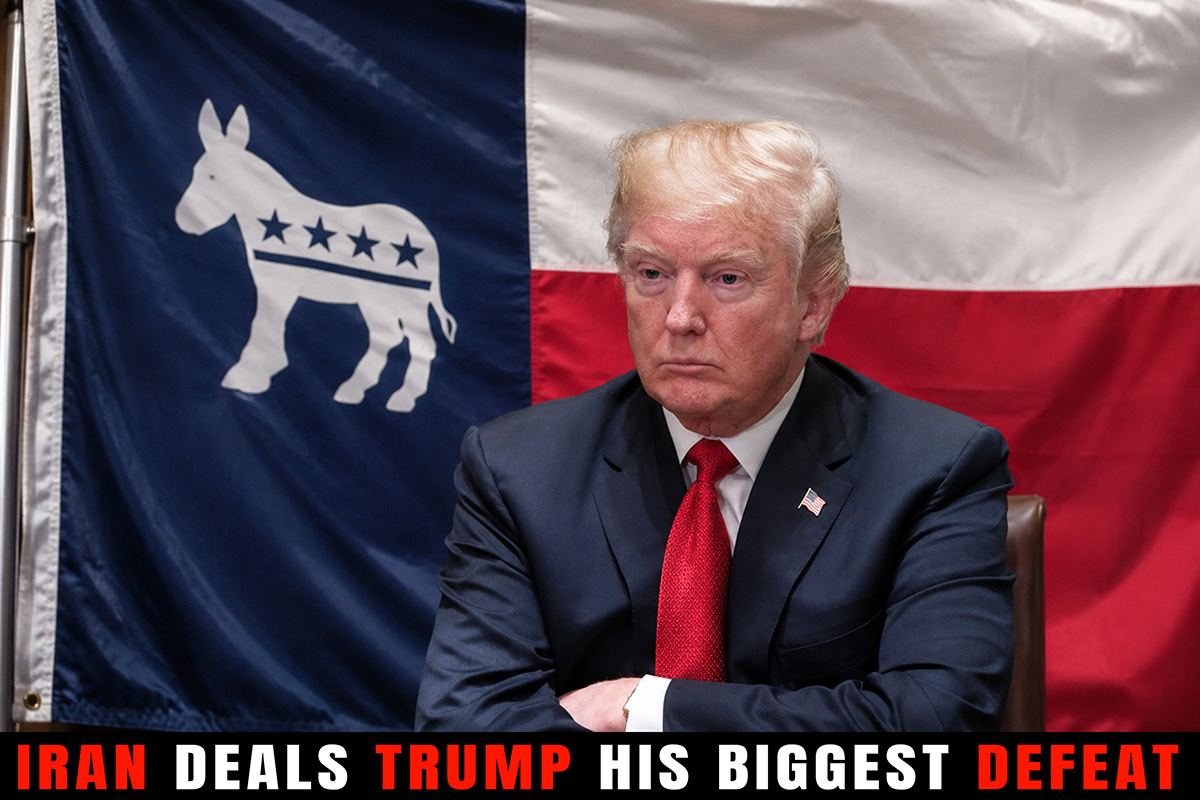
On November 3, 2026, American voters delivered a sweeping political defeat to President Donald Trump and the Republican Party. Democrats captured control of both chambers of Congress, overturned longstanding Republican advantages in states once considered reliably conservative, and transformed the final two years of Trump’s presidency into a confrontation with an opposition party newly empowered to investigate, obstruct, and challenge his administration. Among the forces contributing to this extraordinary reversal was a military conflict that Trump had presented as necessary to prevent Iran from acquiring nuclear weapons.
The resulting paradox is profound. The United States entered an escalating confrontation with Iran intending to neutralize a strategic threat. Yet after successive military campaigns, the status of Iran’s nuclear capabilities remains uncertain, the economic consequences have reached American households, and the administration responsible for the intervention has suffered a historic electoral defeat. What began as a demonstration of military power may have become one of the most consequential political miscalculations of Trump’s presidency.
The provocative comparison in this article’s title concerns political consequences, not the human devastation of nuclear warfare. No electoral defeat can reasonably be equated with the deaths, environmental destruction, and potentially irreversible international consequences of an actual nuclear exchange. The argument is narrower and more disturbing: a military campaign designed to prevent a catastrophic future may have produced immediate political damage without conclusively eliminating the danger it was intended to address.
The Nuclear Threat That Defined the Mission
Iran’s nuclear program has generated international concern for more than two decades. Its uranium enrichment activities, restrictions on international inspections, and disputes over safeguards obligations have repeatedly raised questions about whether Tehran intended to preserve the ability to develop nuclear weapons. Iran has maintained that its nuclear activities serve peaceful purposes, while the United States, Israel, and other governments have challenged aspects of that explanation.
Understanding the distinction between nuclear capability and an actual nuclear arsenal is essential. Uranium enrichment facilities, nuclear material stockpiles, weaponization research, delivery systems, and assembled nuclear weapons represent different components of a potential military nuclear program. A country can possess some of these capabilities without possessing a completed nuclear weapon. Likewise, destroying enrichment facilities does not necessarily destroy accumulated scientific knowledge, undeclared material, or the capacity to rebuild.
Before the latest military escalation, American intelligence assessments had distinguished Iran’s technical ability to pursue nuclear weapons from a determination that its leadership had authorized the construction of an actual weapon. This distinction complicates the political language surrounding the conflict. The administration’s objective of preventing Iran from acquiring nuclear weapons cannot automatically be described as the destruction of an existing, verified Iranian nuclear arsenal.
That distinction matters because the success of military operations must be measured against an identifiable objective. If the objective was to damage nuclear infrastructure, physical destruction may demonstrate tactical success. If the objective was to permanently eliminate Iran’s ability to produce nuclear weapons, the evidentiary threshold is considerably higher. If the objective was to prevent a future Iranian decision to acquire nuclear weapons, the question becomes one of long-term deterrence, diplomacy, verification, and political behavior.
The First Claim of Obliteration
In June 2025, the United States and Israel conducted strikes against Iranian nuclear facilities. President Trump subsequently characterized the destruction of Iran’s principal enrichment infrastructure in sweeping terms, presenting the operation as a decisive military achievement. The language suggested that the nuclear problem had been resolved through overwhelming force.
However, the strategic meaning of such a declaration depended upon information that could not be established solely through descriptions of bomb damage. The extent of underground destruction, the whereabouts of enriched nuclear material, the survival of specialized equipment, and the ability of Iranian authorities to reconstruct damaged facilities remained central questions.
The distinction between a successful strike and a successful strategic outcome became increasingly important when subsequent assessments indicated that Iran might seek to recover its nuclear capabilities. The possibility of reconstruction challenged the assumption that physical destruction alone could permanently eliminate a technically sophisticated nuclear program.
For Trump, this created a political vulnerability. A president who had publicly characterized an earlier operation as decisive would face difficult questions if further military action became necessary against the same underlying threat. The issue was not simply whether American aircraft and weapons had performed effectively. It was whether the original political promise had exceeded the strategic results.
February 28, 2026: The Conflict Escalates
On February 28, 2026, the United States and Israel launched additional military operations against Iran. According to the Congressional Research Service, Trump identified preventing Iran from acquiring nuclear weapons, destroying Iranian missiles, and dismantling the country’s missile industry among the objectives of the operation.
The renewed campaign substantially widened the political stakes. What had been presented as a successful effort to neutralize critical nuclear infrastructure in 2025 was followed by further military operations in 2026. Supporters of the intervention argued that Iran’s efforts to rebuild its capabilities and the threat posed by its missile forces justified renewed action. Critics questioned whether the administration had underestimated the durability of Iran’s strategic capabilities or overstated the results of the earlier strikes.
Both arguments deserve examination. A state that retains the capability and intention to rebuild military infrastructure may require continuing deterrence. Conversely, a military strategy that repeatedly destroys facilities without producing a durable political or verification arrangement risks becoming an open-ended commitment. The tactical success of individual operations cannot substitute for a coherent explanation of how the conflict ends.
For American voters, the distinction may have become increasingly difficult to reconcile with the administration’s original assurances. If the threat had already been neutralized, why was further intervention necessary? If further intervention was essential, what had the earlier declaration of success actually established? These questions became especially consequential as the conflict’s domestic costs increased.
The Nuclear Program That Could Not Be Conclusively Accounted For
By October 2026, the Congressional Research Service reported that the status of Iran’s nuclear program remained unclear. The International Atomic Energy Agency had withdrawn inspectors following the June 2025 strikes, and the extent to which subsequent military operations had affected Iran’s ability to produce nuclear weapons could not be established conclusively from available information.
This uncertainty does not demonstrate that the military operations failed to destroy important infrastructure. Nor does it establish that Iran currently possesses a deployable nuclear weapon. It establishes something strategically significant: the publicly available evidence does not permit a definitive conclusion that the nuclear threat has been permanently eliminated.
Military planners distinguish between physical damage, functional degradation, and permanent denial of capability. An enrichment facility may be destroyed while technical personnel survive. Centrifuges may be rendered inoperable while design information remains available. Nuclear material may be inaccessible to inspectors without necessarily having been destroyed. Each possibility carries different implications for future security.
There is also a fundamental difference between delaying a nuclear program and ending it. Delay may be valuable, particularly when it creates opportunities for diplomacy, verification, or political change. But delay becomes a less persuasive measure of strategic success when the public has been led to expect permanent elimination of the threat.
The absence of comprehensive international inspection further complicates any confident assessment. Without reliable access to relevant facilities, inventories, and personnel, neither optimistic claims of total destruction nor alarmist claims of imminent nuclear breakout can be accepted without qualification.
The Strategic Problem of an Unfinished War
A military campaign can achieve its immediate operational objectives and still fail to produce the desired political outcome. History provides numerous examples of governments successfully defeating military formations or destroying infrastructure while failing to resolve the political conditions that generated the original conflict.
Iran presents a particularly difficult strategic problem because its nuclear capabilities exist within a broader system of national security institutions, regional alliances, military industries, and political calculations. Destroying a facility does not necessarily change the leadership’s perception of external threats. Indeed, military attacks may strengthen the argument among Iranian hardliners that nuclear deterrence is necessary to prevent future intervention.
That possibility does not prove that the strikes increased Iran’s determination to acquire nuclear weapons. It does, however, identify a plausible strategic risk. A government subjected to repeated attacks may conclude that conventional defenses are insufficient, even if its nuclear infrastructure has been severely damaged.
Conversely, the operations may have reduced Iran’s immediate capacity to pursue nuclear weapons and weakened military capabilities that threatened neighboring states. These potential gains should not be dismissed simply because the campaign became politically unpopular. A complete assessment requires separating military effectiveness from public approval.
The administration’s challenge was to translate military operations into a durable strategic result. Without credible verification, a stable political arrangement, or a clearly defined endpoint, the conflict risked being judged not by the targets destroyed but by the costs imposed and the uncertainty left behind.
American Households Become Part of the Battlefield
Modern military conflicts do not remain confined to their geographic theaters. Energy markets, international shipping, insurance costs, investment expectations, and consumer confidence transmit their economic consequences across national borders. A conflict involving Iran carries particular sensitivity because of the country’s position in the Persian Gulf and the strategic importance of regional oil transportation.
During the 2026 election campaign, rising gasoline prices became a politically damaging consequence associated with the Iran conflict. Reporting by The Texas Tribune described how the war contributed to higher fuel costs and complicated Republican efforts to persuade voters that the administration was improving household affordability.
The relationship between war and domestic economic dissatisfaction was particularly damaging because it connected a distant foreign-policy decision with an immediate personal expense. A voter may have limited information about uranium enrichment, missile inventories, or the effectiveness of precision strikes. The price displayed at a gasoline station, however, requires no specialized knowledge.
Fuel costs also influence transportation, agriculture, manufacturing, distribution, and consumer goods. Although not every price increase can be attributed to the war, an energy shock can intensify inflationary pressures already troubling households. When voters perceive that government decisions have made ordinary life more expensive, the political consequences can extend far beyond foreign-policy approval ratings.
This is where the administration’s strategic argument encountered its most difficult domestic test. Americans were asked to accept immediate economic consequences in exchange for a security benefit whose permanence remained uncertain. The longer the conflict continued, the more difficult that exchange became to defend politically.
The Political Collapse of November 3
The 2026 midterm elections delivered a sweeping defeat to Republicans. Reuters reported that Democrats secured control of both the House of Representatives and the Senate, reversing the balance of power in Washington and setting the stage for divided government when the new Congress convenes in January 2027.
The Democratic advance extended into states that had formed essential components of Republican national strength. Texas elected Democrat James Talarico to the United States Senate, ending a decades-long Democratic absence from the state’s Senate delegation. Democrat Gina Hinojosa also won the governorship, marking a historic change in Texas politics.
Democratic gains extended beyond Texas. Kansas elected a Democratic senator for the first time in nearly a century, while South Carolina and other traditionally Republican territories experienced significant political reversals. The geographical breadth of the results challenged the assumption that Republican dominance in these areas could survive almost any national political environment.
In their November 4 Axios analysis, Jim VandeHei and Mike Allen described the election as an exceptionally broad repudiation of Trump and the Republican Party he had reshaped. Their assessment emphasized not merely the loss of individual seats but the collapse of electoral advantages that Republicans had treated as structurally durable.
The election cannot responsibly be explained by the Iran war alone. Economic dissatisfaction, tariffs, concerns about corruption, candidate quality, presidential conduct, and the ordinary tendency of midterm electorates to punish the governing party all contributed to the environment. Nevertheless, the war became a major component of the broader judgment voters rendered against the administration.
Texas: The Political Warning That Became Reality
Texas provides an unusually revealing case study because the state’s Republican establishment recognized the danger before Election Day. In its October 31 reporting, The Texas Tribune described a closely contested Senate race between James Talarico and Ken Paxton, with Republican officials increasingly concerned that the combination of an unpopular war, rising gasoline prices, and internal party divisions could produce an unprecedented defeat.
Paxton’s candidacy presented additional vulnerabilities. His Republican primary victory over longtime Senator John Cornyn followed a bruising internal contest, and his nomination was supported by Trump despite concerns among some Republicans about his general-election appeal. These circumstances complicate any claim that the Iran war alone determined the result.
Yet the connection between the conflict and electoral vulnerability was not merely an interpretation imposed after the election. October reporting described leaked remarks in which Paxton acknowledged that gasoline prices associated with the Iran war were hurting his campaign. The political consequences were being recognized within Republican circles while the campaign was still underway.
Trump and Vice President JD Vance invested considerable political attention in Texas, attempting to mobilize Republican voters and preserve a state essential to the party’s national electoral calculations. Nevertheless, Talarico won the Senate race, demonstrating that the Republican coalition could fracture even in territory long regarded as reliably conservative.
The significance extends beyond a single election. Texas carries enormous electoral weight, and a genuinely competitive statewide political environment would force both parties to reconsider campaign resources, coalition strategies, and assumptions about the presidential electoral map. The 2026 result does not establish that Texas will remain Democratic, but it eliminates the credibility of treating Republican statewide victories as automatic.
What the Voters Actually Said
Post-election voter research provides a more disciplined basis for interpreting the outcome than political rhetoric alone. The Associated Press Voter Poll identified widespread dissatisfaction with inflation, living costs, the Iran war, and the administration’s economic policies. Many voters also expressed concern about presidential priorities and the need for stronger congressional oversight.
These findings support the conclusion that the war contributed to Republican losses. They do not establish that the war was the sole cause or permit an exact calculation of how many congressional seats it cost the party. Voters can hold multiple grievances simultaneously, and election outcomes reflect interactions among national conditions, local candidates, turnout, and political identity.
That distinction is important because political analysis often confuses a contributing factor with a sufficient explanation. The Iran conflict may have intensified dissatisfaction among voters already concerned about prices, government competence, or presidential behavior. Its influence may therefore have been cumulative rather than independent.
From the administration’s perspective, that cumulative effect may be precisely what made the conflict so damaging. A foreign-policy decision that increases domestic economic pressure can reinforce existing doubts about leadership, transforming several separate complaints into a broader judgment about presidential competence.
Military Victory and Political Defeat Are Not Opposites
It is possible for American forces to conduct successful operations against Iranian military targets while the administration directing those operations suffers a political defeat. Military effectiveness and political legitimacy are related, but they are not interchangeable.
A successful military strike may destroy an intended target with precision. A successful national-security strategy must also consider whether the operation advances durable security, preserves alliances, limits escalation, controls economic consequences, and maintains sufficient public confidence to sustain the policy.
The Iran campaign therefore presents two distinct questions. First, how substantially did the operations reduce Iran’s nuclear and missile capabilities? Second, did the resulting security benefits justify the economic, diplomatic, military, and political costs incurred by the United States?
The first question remains constrained by incomplete public information and limited international verification. The second has already received a partial political answer through the November election, although elections cannot determine technical military outcomes or settle every question of strategic necessity.
The administration’s supporters can reasonably argue that preventing Iranian nuclear proliferation is a security objective worth pursuing even at significant political cost. Its critics can reasonably argue that the administration pursued that objective through a campaign whose results remain uncertain and whose consequences undermined domestic stability. Neither position eliminates the need for evidence concerning the actual condition of Iran’s nuclear infrastructure.
The Price of Declaring Victory Too Early
One of the most consequential aspects of the Iran confrontation may be the administration’s public presentation of military success. When leaders describe complex strategic operations in absolute terms, they create expectations that may be impossible to satisfy.
The word obliteration conveys finality. It suggests that a threat has been physically destroyed and that the problem requiring military action has been resolved. In nuclear proliferation, however, finality is difficult to establish without comprehensive accounting of materials, facilities, expertise, and future intentions.
Repeated operations against a supposedly eliminated threat can undermine public confidence even when each individual operation achieves meaningful military objectives. The problem is not necessarily the effectiveness of American forces. It is the credibility of political assurances about what those forces have accomplished.
Political credibility becomes especially important when a government requests further sacrifice. Voters asked to accept higher fuel prices, military expenditures, or the risk of escalation may demand stronger evidence that the campaign is producing a lasting result. Without that evidence, confidence can deteriorate even among citizens who originally supported intervention.
The Constitutional Consequences of the Midterm Defeat
The Democratic capture of Congress fundamentally changes the administration’s political environment. When the new Congress convenes in January 2027, Democratic majorities will possess substantial authority over legislative priorities, appropriations, oversight, committee investigations, and the confirmation process in the Senate.
Congressional committees may examine the intelligence assessments that preceded military action, the administration’s public claims about nuclear destruction, the financial cost of operations, and the relationship between military objectives and diplomatic planning.
Lawmakers may also scrutinize the legal basis for continued hostilities, the administration’s compliance with applicable war-powers requirements, and whether the executive branch adequately informed Congress about the scope and anticipated duration of military operations.
Such investigations would not themselves establish misconduct. Congressional oversight is a constitutional function, and its legitimacy depends on evidence, procedural fairness, and the distinction between political disagreement and unlawful conduct.
Nevertheless, the shift in congressional control introduces a powerful institutional constraint. A president who entered the conflict with greater legislative support may now confront an opposition capable of demanding records, compelling testimony where legally authorized, and challenging future funding or policy decisions.
Could the Conflict Have Changed the Course of the Presidency?
The question is not whether the Iran war single-handedly destroyed Republican electoral prospects. The available evidence does not support such a simplistic conclusion. The more persuasive question is whether the conflict accelerated an existing political decline and converted a difficult midterm environment into a historic defeat.
Several mechanisms make that possibility credible. The war contributed to higher energy costs, created uncertainty about American strategic objectives, exposed the administration to questions about earlier declarations of victory, and complicated Republican campaigns already burdened by economic and political dissatisfaction.
These mechanisms can reinforce one another. Rising prices undermine confidence in economic management. Uncertain military outcomes undermine confidence in foreign-policy judgment. Repeated assurances that a threat has been eliminated, followed by renewed conflict, can undermine confidence in official communication. Together, they can create an impression of a government unable to deliver the outcomes it promised.
The November election suggests that this broader loss of confidence reached deeply into the Republican electoral coalition. The magnitude of the losses indicates dissatisfaction extending beyond the usual boundaries of partisan competition, although determining the precise contribution of the Iran conflict would require more detailed voter analysis.
The Nuclear War Comparison
The comparison between the political consequences of the Iran campaign and those of an actual nuclear war is intentionally unsettling. Its purpose is not to minimize nuclear warfare. A nuclear exchange could cause mass casualties, severe infrastructure destruction, environmental contamination, economic collapse, and consequences extending across generations and national borders.
There is no credible basis for asserting that the political damage from the present conflict exceeds the total consequences of nuclear war. Such a claim would confuse political survival with human survival and substitute rhetorical intensity for meaningful comparison.
There is, however, a legitimate political argument beneath the provocative language. Trump undertook military action in the name of preventing a nuclear catastrophe, yet the resulting conflict may have damaged his domestic authority so severely that the administration’s ability to pursue its wider agenda has been fundamentally diminished.
In that limited political sense, the campaign may have produced a self-defeating outcome: the president accepted enormous strategic and political risks to eliminate a threat whose permanent elimination remains unverified, while losing the congressional support necessary to govern effectively during the remainder of his term.
What Happens to Iran Now?
The election changes American domestic politics, but it does not eliminate the underlying nuclear question. Iran’s technical capabilities, remaining nuclear material, political intentions, and relationship with international inspectors remain central to regional and global security.
A durable outcome would require a reliable understanding of what survived the strikes, whether reconstruction is occurring, and what mechanisms could prevent renewed movement toward nuclear weapons. Such an outcome might involve deterrence, diplomatic agreements, inspections, sanctions, or combinations of these instruments.
The United States must also consider the positions of Israel, Gulf states, European governments, and other international actors whose security calculations are affected by Iran’s military capabilities. A policy that satisfies domestic political demands but fails to address regional security concerns could leave the original strategic problem unresolved.
At the same time, indefinite military pressure without a defined political endpoint risks prolonging economic instability and reinforcing the very security concerns that encourage nuclear proliferation. The challenge is to convert military leverage into an outcome that can be verified and sustained.
The Republican Party After the Defeat
The political consequences extend beyond Trump’s presidency. The Republican Party must now confront whether its electoral identity has become so closely associated with one leader that his policy failures, perceived or actual, can produce losses across states and institutions that once appeared secure.
Axios argued that the remaining Republican congressional coalition may become more loyal to Trump even after the defeat, because many of his internal critics had already been removed from positions of influence. If that assessment proves correct, the party could face a difficult choice between maintaining ideological unity and rebuilding broader electoral appeal.
Some Republicans may conclude that the Iran campaign was strategically justified but politically mishandled. Others may question the intervention itself, the administration’s communication strategy, or the broader relationship between military commitments and domestic economic priorities.
Democrats face their own uncertainties. Winning a sweeping election does not guarantee a durable governing coalition, particularly when factions disagree about economic policy, foreign intervention, and the appropriate response to Trump. The new congressional majority will be judged not only by its ability to challenge the administration but also by its capacity to produce credible alternatives.
A Presidency Confronts the Consequences of Its Own Strategy
The central irony of the Iran campaign is that the United States may have inflicted substantial damage on Iranian military infrastructure without achieving a publicly verifiable resolution of the nuclear problem. Meanwhile, the administration directing those operations has suffered an electoral defeat whose constitutional and political consequences are immediate.
That contrast does not prove that military action was unnecessary or that Iran posed no serious threat. Nor does it demonstrate that the campaign achieved nothing. It reveals the danger of measuring national-security success exclusively through military destruction while underestimating economic endurance, public confidence, strategic uncertainty, and democratic accountability.
The events of November 2026 raise a question that extends beyond Trump, Iran, or the Republican Party: Can a government claim strategic victory when the military objective remains uncertain, the domestic costs are mounting, and the electorate has withdrawn its political confidence?
For Trump, the answer may define the remainder of his presidency. For Republicans, it may shape the party’s future. For Iran and the international community, the unresolved nuclear question remains a danger that cannot be settled by election results, political declarations, or the destruction of individual facilities alone.
The most consequential failure of the campaign may ultimately prove to be neither a failed military strike nor an electoral defeat considered in isolation. It may be the failure to convert extraordinary military power into a durable, verifiable, and politically sustainable national-security outcome.
Sources and Further Reading
Congressional Research Service. (2026, October 13). Iran and nuclear weapons production (IF12106). Congressional analysis of Iran’s nuclear capabilities and verification uncertainty.
Congressional Research Service. (2026, October 20). U.S. military operations against Iran’s missile and nuclear programs (IN12665). Congressional analysis of the 2026 military campaign.
Reuters. (2026, November 4). Democrats seize Congress in sweeping midterm repudiation of Trump. Election results and political consequences.
Associated Press. (2026, November 4). How Trump and Republicans lost the 2026 midterm elections, according to the AP Voter Poll. National voter survey and electoral analysis.
VandeHei, J., & Allen, M. (2026, November 4). Behind the Curtain: The Trump obliteration. Axios. Political analysis of the midterm results.
Guo, K., & Birenbaum, G. (2026, October 31). With U.S. Senate control at stake, Republicans fear the once-unthinkable: A blue Texas. The Texas Tribune. Pre-election reporting on the Iran war, fuel prices, and Texas politics.
The Texas Tribune. (2026, November 3). James Talarico leads Ken Paxton in early Texas Senate returns. Texas election reporting.
CBS News. (2026, November 3). James Talarico wins Texas 2026 Senate election, flipping seat for Democrats. Texas Senate election projection.