

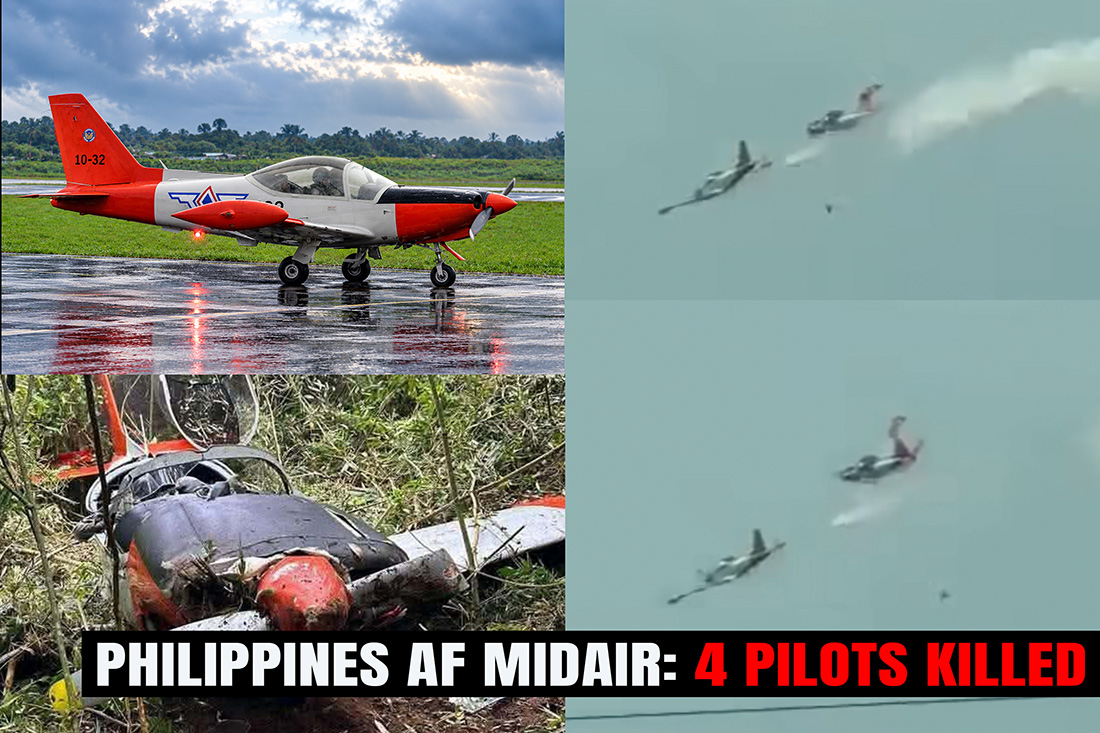
BATANGAS, PHILIPPINES — Four Philippine Air Force (PAF) pilots were killed on Friday, October 23, 2026, when two SIAI-Marchetti SF.260FH military training aircraft collided in midair during a formation training flight over Fernando Air Base in Lipa City, Batangas. Both aircraft were destroyed in the accident, which occurred at approximately 3:51 p.m. local time.
The fatal collision involved aircraft operated by the Philippine Air Force’s 102nd Pilot Training Squadron, known as the “Cougars.” According to information published by the Aviation Safety Network (ASN), each aircraft carried two pilots, and all four occupants perished.
Collision During Formation Training
The two aircraft were conducting a formation training flight when they collided above Fernando Air Base, identified by the International Civil Aviation Organization location indicator RPUL. Both aircraft subsequently descended within the military installation’s perimeter.
The accident occurred during the maneuvering phase of flight. Formation flying requires participating pilots to maintain carefully controlled relative positions while coordinating aircraft movement, speed, altitude, and separation. A loss of separation during these operations can produce a collision with little time available for recovery.
Although the circumstances establish that the aircraft collided during formation training, the available accident information does not identify the precise maneuver being performed, the relative positions of the aircraft immediately before impact, or the sequence of events that led to the collision.
The Philippine Air Force has not established a publicly confirmed probable cause in the accident information reviewed for this report.
Four Fatalities and Two Aircraft Destroyed
Both SF.260FH aircraft were destroyed. The Aviation Safety Network records two fatalities aboard each aircraft, accounting for four military personnel killed in the collision.
The ASN records also distinguish between fatalities aboard the aircraft and other fatalities associated with the occurrence. In each of the two records, two fatalities are listed as occupants of the aircraft, while the separate “other fatalities” field accounts for the two pilots aboard the second aircraft.
Accordingly, the figures should not be interpreted as indicating additional fatalities on the ground. The combined accident involved four fatalities across the two aircraft, rather than four occupants plus additional victims.
The aircraft registration and military serial-number information displayed in the available records is incomplete. Consequently, the precise individual aircraft identities cannot be established from those entries alone.
The SIAI-Marchetti SF.260
The SIAI-Marchetti SF.260 is an Italian-designed, single-engine, low-wing aircraft developed for advanced flight training and other military applications. The aircraft is known for its relatively high performance, responsive handling, and suitability for demanding pilot-training exercises.
The Philippine Air Force has employed the SF.260 family in military aviation training. The SF.260FH variant identified in the accident records was being operated by the service’s 102nd Pilot Training Squadron at the time of the collision.
Training aircraft of this class support the development of essential flying skills, including aircraft handling, navigation, maneuvering, and formation procedures. Formation training is particularly demanding because pilots must continuously monitor both their own aircraft and the position and movement of other participating aircraft.
Philippine Air Force Grounds SF.260 Fleet
Following the accident, the Philippine Air Force temporarily grounded its SF.260 aircraft fleet pending an investigation into the circumstances surrounding the collision, according to the Aviation Safety Network narrative.
Such a suspension allows military authorities to evaluate operational procedures, aircraft condition, training practices, and other potential contributing factors before determining whether flight operations can safely resume.
The grounding itself does not establish that a mechanical defect contributed to the accident. At this stage, the available information does not support attributing the collision to aircraft malfunction, pilot error, procedural deficiencies, or any other specific cause.
Investigation and Aviation Safety Implications
The investigation will need to establish the aircrafts’ relative positions, flight paths, altitude, airspeeds, communication procedures, and assigned formation responsibilities immediately before the collision.
Investigators may also examine training documentation, witness accounts, available video recordings, maintenance records, operational instructions, and any recoverable flight-related evidence. The availability and evidentiary value of these materials have not yet been established publicly.
Midair collisions during military training present particular investigative challenges because aircraft operating in close proximity may have only seconds to recognize and respond to an unexpected change in separation.
Determining the circumstances of this accident will be essential not only to understanding the loss of four Philippine Air Force pilots but also to identifying whether additional safeguards or changes in training procedures are warranted.
The October 23 collision represents a significant loss for the Philippine Air Force and its pilot-training community. Until investigators release their findings, conclusions concerning the cause of the accident would be premature.
Sources
Aviation Safety Network. (2026, October 23). SIAI-Marchetti SF.260FH accident records, Fernando Air Base, Lipa City, Batangas. Aviation Safety Network Aviation Safety WikiBase.
Reuters. (2026, October 24). Four Philippine Air Force pilots killed in training accident. Reuters.
Channels Television. (2026, October 24). Four pilots killed in mid-air collision of Philippines military planes. Channels Television.